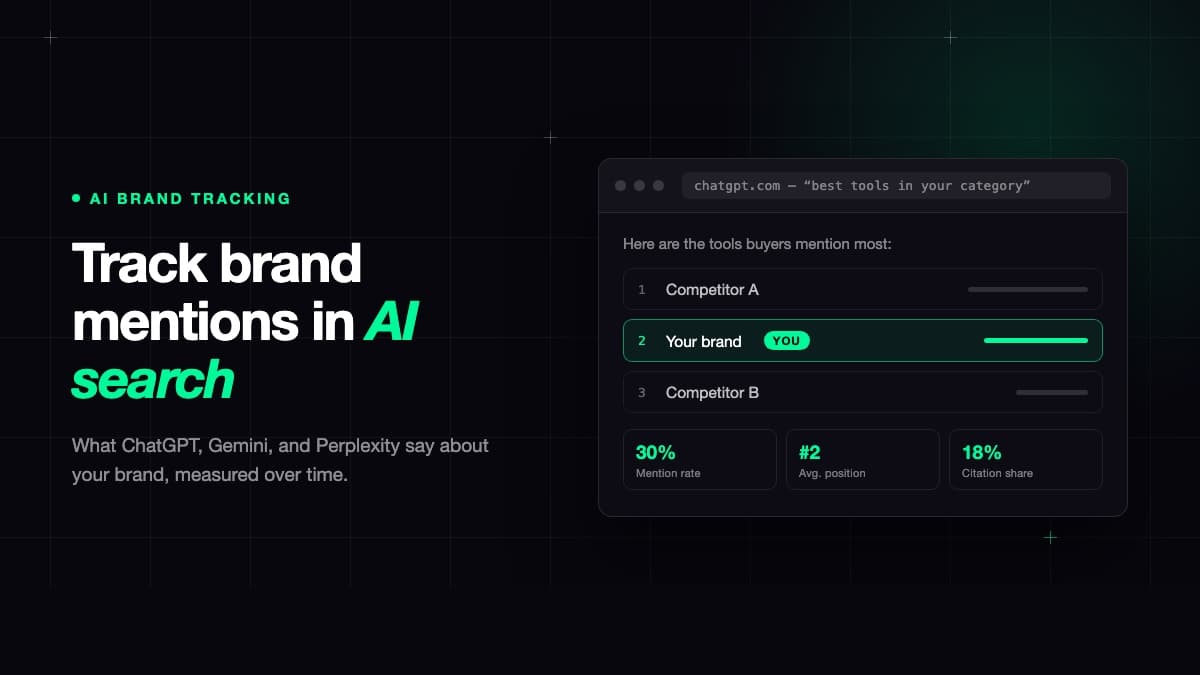

Decision intelligence turns data into decisions, using AI to recommend what to do next, rather than only reporting what happened. It combines analytics, modeling, and reasoning. The strongest decision intelligence reasons on live real-world signals, so the recommendation reflects the world today, not a report from last quarter.
The term covers very different software, sorted by the decision each tool serves. Some automate operational calls from rules. Some report and explore. Some model at enterprise scale. One reads the world outside your systems. This guide compares the best decision intelligence platforms of 2026 by category, so you know what you are actually comparing.
Key takeaways
- Decision intelligence platforms split by the decision they serve: agentic operational automation, enterprise AI, graph and entity resolution, rules and workflow, analytics-led exploration, process intelligence, and decision AI built on real-world signals.
- Match the platform to the decision. Aera automates operational calls. Palantir models integrated enterprise data. FICO and SAS run regulated rules. Domo and ThoughtSpot report and explore.
- Turnaround runs from days to many months. Low-code analytics deploy in days. Enterprise automation and graph platforms take months. Match the timeline to your urgency.
- The input decides the value. A recommendation is only as good as the data behind it, and most tools reason only on data you already hold.
- Decision AI is the newest kind. It reasons across your systems and real-world signals, then recommends what to do next. One entry on this list does that.
The best decision intelligence platforms compared
Here is the at-a-glance view, sorted by the decision each platform serves. Details follow in the same order.
| # | Platform | Category | Best for |
|---|---|---|---|
| 1 | Aera Technology | Agentic operational DI | Autonomous supply-chain and operations decisions |
| 2 | Sena (Rwazi) | Decision AI | Decisions built on real-world consumer signal |
| 3 | Palantir Foundry + AIP | Enterprise AI | Operational execution on integrated data |
| 4 | Quantexa | Graph decision intelligence | Entity resolution for risk and fraud |
| 5 | Pega | Rules and workflow | Next-best-action across customer journeys |
| 6 | FICO Platform | Rules and workflow | Regulated credit, risk, and fraud decisions |
| 7 | SAS Intelligent Decisioning | Rules and workflow | Auditable decisions in regulated industries |
| 8 | Domo | Analytics-led DI | Real-time dashboards with low-code automation |
| 9 | ThoughtSpot | Analytics-led DI | Natural-language search and root-cause |
| 10 | Tellius | Analytics-led DI | NLQ with automated driver analysis |
| 11 | Celonis | Process intelligence | Seeing where a process is losing value |
| 12 | Stravito | Knowledge management | Decisions anchored in existing research |
Agentic operational decision intelligence
1. Aera Technology
Best for: Global operations, supply chain, finance, and commercial teams that need cross-functional, real-time decision automation with human oversight.
Key capabilities:
- Agentic AI that recommends and executes routine operational decisions.
- A decision data model that unifies data and logs every decision for audit.
- A skills framework to encode business logic, plus a control room to monitor, approve, and audit.
Turnaround: Multi-month enterprise rollout. Onboarding and change management are significant.
Skip it if: You need strategic or cross-functional reasoning beyond operations. It automates known operational calls, and the setup is heavy.
Decision AI
2. Sena, built by Rwazi
Best for: Enterprise teams whose strategic decisions depend on what is happening outside their own systems, next to what is inside them.
Sena is a decision AI, and that makes it different from everything else on this list.
How Sena is different:
- Every other platform here reasons on data you already hold. Sena adds the world outside your systems. It reads live consumer activity from a 5M+ consumer network across 190+ countries, plus in-store conditions through computer vision.
- It connects the systems you already run. Sena pulls Salesforce, HubSpot, your point-of-sale, and your data warehouse into a single reasoning layer across 250+ integrations.
- It reasons across all of it. Signals surface what is changing and why. Simulations show the likely outcome before you commit. Then Sena recommends where to act.
- It refreshes on demand. When the evidence is thin, Sena tells you and closes the gap with a fresh signal.
- It answers the decision behind the number and traces every answer to its source, with the signals, geographies, and timestamps behind it.
Turnaround: Continuous. Sena reads live signals, so it is a running loop rather than a one-off deployment.
Skip it if: Your decisions live entirely inside your own systems and rules. Sena earns its place when the real world outside the firewall drives the call.
See how Sena turns real-world signals into decisions. Book a tailored demo.
Enterprise AI
3. Palantir Foundry + AIP
Best for: Large, technical enterprises integrating data into a single operational model and wiring AI into legacy workflows.
Key capabilities:
- Unifies fragmented enterprise data into one operational model.
- AIP brings agents and LLMs into workflows with governance around them.
- Executes decisions directly inside operational processes.
Turnaround: Multi-month deployment with heavy data-engineering setup.
Skip it if you lack the engineering to build on it. The capability is deep, and so is the commitment.
Graph decision intelligence
4. Quantexa
Best for: Financial services, insurance, and government teams unifying fragmented data for risk, fraud, and anti-money-laundering decisions.
Key capabilities:
- Graph analytics and entity resolution connect records other systems treat as separate.
- A single contextual view of customers, assets, and transactions.
- Supports both automated decisioning and human investigation.
Turnaround: Months, and it takes graph-data experience to stand up.
Skip it if entity resolution is not your core problem. The graph approach shines on connected-data questions and adds complexity elsewhere.
Rules and workflow engines
5. Pega
Best for: Enterprises running next-best-action decisions across customer journeys and omnichannel touchpoints.
Key capabilities:
- A decisioning engine for real-time customer engagement and marketing.
- Business rules combined with predictive models for next-best-action.
- Workflow automation across service, sales, and operations.
Turnaround: Weeks to months per decisioning program.
Skip it if your need is open, strategic reasoning rather than customer-journey automation.
6. FICO Platform
Best for: Financial services teams making high-volume credit, risk, and fraud decisions that must be auditable.
Key capabilities:
- Industry-standard decision rules for credit and risk.
- Predictive models plus business-rules management for consistent, explainable calls.
- Strong support for regulatory compliance and auditability.
Turnaround: Weeks to months; regulated deployments run longer.
Skip it if: You need general enterprise reasoning. It is built for finance and risk, and it is heavier than lighter tools.
7. SAS Intelligent Decisioning
Best for: Regulated or precision-heavy industries operationalizing statistical models and rules into automated flows.
Key capabilities:
- Combines analytics, machine learning, and decision rules in one flow.
- Auditable decision trees and strict model governance.
- Integration with external systems and regulatory workflows.
Turnaround: Weeks to months, with model and rule setup up front.
Skip it if: Your use case is simple. The depth and cost fit high-stakes, repeatable decisions.
Analytics-led decision intelligence
8. Domo
Best for: Teams without dedicated data-science resources that want real-time dashboards and low-code automation.
Key capabilities:
- 1,000+ pre-built connectors to unify data quickly.
- Real-time dashboards with workflow triggers and alerts.
- AI-driven natural-language questions for non-technical users.
Turnaround: Days to weeks, because the connectors set up quickly.
Skip it if: You need closed-loop automation or governed enterprise decisioning. It leads with dashboards, and automation is lighter.
9. ThoughtSpot
Best for: Business teams that want self-serve answers from complex data using natural language.
Key capabilities:
- Natural-language search on a governed model, no SQL required.
- Automated analysis that surfaces anomalies and their drivers.
- Runs on cloud warehouses like Snowflake, BigQuery, and Databricks.
Turnaround: Weeks, and a governed data model is required first.
Skip it if: You need automated decisioning. It excels at exploration, and the person still decides the action.
10. Tellius
Best for: Data and business teams that want natural-language questions plus automated root-cause analysis.
Key capabilities:
- Natural-language query with context memory.
- Automated key-driver and root-cause analysis.
- AutoML for predictions, with connectors for alerts and downstream tools.
Turnaround: Weeks, with a learning curve on advanced features.
Skip it if you need managed, governed enterprise automation. It speeds investigation, and the action still sits with the team.
Process intelligence
11. Celonis
Best for: Operations and process teams that need to see where a process is losing time or value.
Key capabilities:
- Process mining that reconstructs how work actually flows.
- Identifies inefficiencies and bottlenecks in real time.
- Simulation and automation to steer operations toward a better path.
Turnaround: Weeks to months; it needs event-log data to mine.
Skip it if your problem is market or consumer decisions rather than internal process flow.
Knowledge management
12. Stravito
Best for: Strategy and insights teams that want decisions anchored in the research the organization already owns.
Key capabilities:
- Organizes research and market intelligence into one searchable library.
- A GenAI assistant that summarizes studies with source links.
- Works alongside your BI stack with a light IT lift.
Turnaround: Weeks, running next to your existing tools.
Skip it if: You need quantitative modeling or automated decisioning. It surfaces what the company knows, rather than reading the world outside it.
The taxonomy: what people call decision intelligence?
The SERP is confusing because very different products all claim the term. Sorting them makes the comparison honest.
- Agentic operational platforms automate and execute routine operational decisions.
- Enterprise AI platforms integrate and model large data, then wire AI into workflows.
- Rules and workflow engines apply fixed logic to high-volume, regulated calls.
- Graph decision intelligence connects records other systems treat as separate.
- Analytics-led platforms report, explore, and explain what happened.
- Process intelligence mines how work flows to find where to act.
- Knowledge management organizes what the company already knows.
- Decision AI reasons across your systems and real-world signals, then recommends what to do next.
The first seven work inside your own data. The last one adds the world outside it.
What to look for in a decision intelligence platform?
- Name the decision: "Operational" and "repeated" point to a rule or agentic engine. Open and strategic points to reasoning.
- Check the input: Ask what data each platform reasons on and whether it sees beyond your own systems.
- Weigh setup against speed: Enterprise platforms are powerful and slow to stand up. Low-code analytics move fast.
- Confirm traceability: A defensible decision carries its evidence. Ask to see the source behind a recommendation.
- Run a pilot: Test one real decision before you commit.
How to choose the right decision intelligence platform?
- Name the decision type. An operational call, a regulated rule, an analytics question, and a strategic move each point to a different category above.
- Map your current stack. Confirm the platform connects to the systems you already run.
- Set your timeline. Fast questions point to low-code analytics. Enterprise automation is a multi-month build.
- Confirm governance and traceability. Decision logs and audit trails matter in regulated work.
- Weigh the input. Decide whether your decision rests only on internal data or needs the world outside it.
- Run a pilot on one real decision before you sign a long contract.
Conclusion
The best decision intelligence platform depends on the decision you face. When the decision is strategic and depends on what is happening outside your systems, Sena reasons across your reality and real-world signal and turns the reading into the decision. Start by naming the decision, then match the platform to it.
Frequently asked questions
What is decision intelligence?
Decision intelligence turns data into decisions, using AI to recommend what to do next, rather than only reporting what happened. It combines analytics, modeling, and reasoning. The strongest decision intelligence reasons on live real-world signals, so the recommendation reflects the world today.
What is Decision AI?
Decision AI is enterprise AI that reasons across your internal systems and real-world signals, then recommends a decision you can act on. Sena, built by Rwazi, is a decision AI. It reads live consumer activity across 190+ countries and traces every answer to its source.
What is the difference between decision intelligence and business intelligence?
Business intelligence reports what happened through dashboards and charts. Decision intelligence goes further and recommends what to do next. Business intelligence shows the numbers. Decision intelligence reasons toward the action, often on live signals rather than historical data alone.
What are decision intelligence tools?
Decision intelligence tools span agentic platforms that automate operational calls, enterprise AI that models integrated data, rules engines for regulated decisions, analytics-led platforms that explore and explain, process intelligence, knowledge management, and decision AI that reasons across systems and real-world signals. Match the tool to the decision you face.
What is an example of decision intelligence?
An example is a brand deciding where to expand next. A decision intelligence system reads sales, competitor activity, and real-world consumer signals; models the options, and recommends the market to enter, with the evidence behind the call. The output is a decision, not a chart.
Is decision intelligence the same as AI for decision-making?
They overlap closely. AI for decision-making is the broad idea of using AI to guide choices. Decision intelligence is the discipline and the software that put it into practice, combining data, modeling, and reasoning to produce recommended decisions.
How do you choose a decision intelligence platform?
Start by naming the decision. Operational and repeated calls suit a rules or agentic engine. Open, strategic questions need reasoning across your data and the real world. Check what each platform reasons on, confirm it traces its evidence, and run a pilot on one real decision.